Exploring the Life and Legacy of Albert Einstein
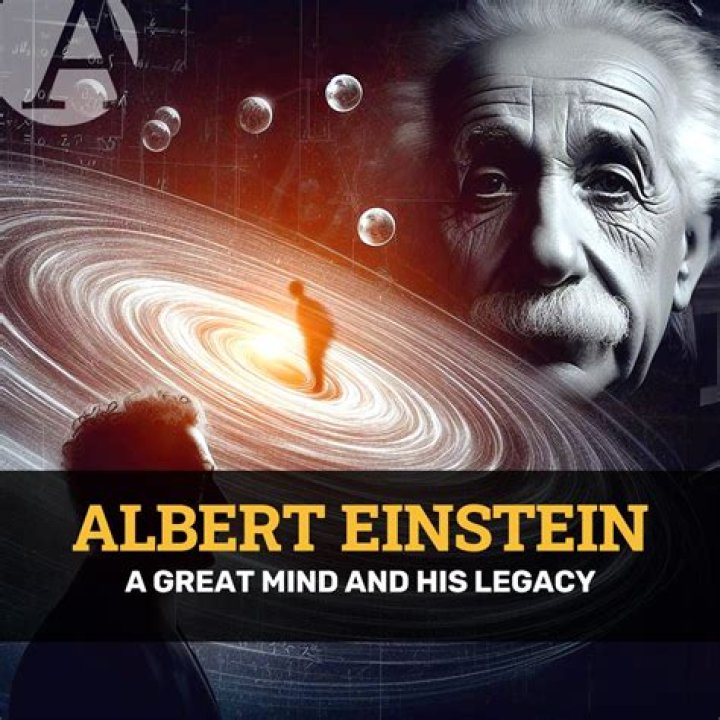
Albert Einstein is not just a name; he is a symbol of genius and innovation in the realm of science. His contributions to physics, particularly the theory of relativity, have reshaped our understanding of time, space, and energy. In this article, we will delve into the life of Albert Einstein, examining his early years, groundbreaking theories, and lasting impact on science and society. Whether you are a student, a science enthusiast, or simply curious about one of the greatest minds in history, this exploration of Einstein's life will provide insights into his genius and the legacy he has left behind.
Born on March 14, 1879, in the small town of Ulm, in the Kingdom of Württemberg, Germany, Einstein's journey to becoming a household name in science wasn't straightforward. He faced numerous challenges, including academic struggles and societal pressures, but his unwavering passion for understanding the universe propelled him forward. Throughout his life, Einstein was not only a brilliant physicist but also a humanitarian, advocating for peace and civil rights.
In the following sections, we will cover various aspects of Einstein's life, including his early education, the formulation of his theories, personal life, and his revolutionary impact on modern physics. By the end of this article, you will have a comprehensive understanding of Albert Einstein's contributions and the enduring relevance of his work in today’s world.
Early Life and Education
Albert Einstein was born into a secular Jewish family, and his early education was marked by both challenges and triumphs. His family moved to Munich when he was a year old, where his father and uncle ran an electrical engineering business. Despite his later brilliance, Einstein struggled in school, often finding the rigid educational system stifling.
Childhood Interests
Einstein showed an early interest in science and mathematics, influenced by his father and uncle. He was particularly fascinated by the workings of a compass, which led him to ponder the mysteries of the universe. His curiosity drove him to explore various scientific concepts, and he became self-taught in many areas.
Formal Education
Einstein attended the Polytechnic Institute in Zurich, Switzerland, where he excelled in mathematics and physics. After graduating in 1900, he faced difficulty finding a teaching position and worked as a patent examiner at the Swiss Patent Office. This job allowed him time to work on his theories, setting the stage for his future breakthroughs.
Groundbreaking Theories
Einstein's most significant contributions to science include the theories of special relativity and general relativity. These theories revolutionized the way we understand the universe.
Special Relativity
Published in 1905, Einstein's theory of special relativity introduced the famous equation E=mc², which describes the relationship between energy (E), mass (m), and the speed of light (c). This equation has profound implications for both theoretical and applied physics, leading to developments in nuclear energy and understanding the cosmos.
General Relativity
In 1915, Einstein expanded his earlier work with the theory of general relativity, which describes gravity not as a force but as a curvature of space-time caused by mass. This groundbreaking theory has been confirmed by various experiments and observations, including the bending of light around massive objects, and it remains a cornerstone of modern physics.
Personal Life
Einstein's personal life was as complex as his scientific theories. He married Mileva Marić in 1903, and they had three children together. However, their marriage faced difficulties, leading to their divorce in 1919. The following year, he married his cousin Elsa Löwenthal, who remained with him until her death in 1936.
Children
- Hans Albert Einstein
- Eduard Einstein
- Lyserl Einstein
Humanitarian Efforts
Beyond his scientific achievements, Einstein was an outspoken advocate for peace, civil rights, and humanitarian causes. He spoke out against war and violence, particularly during the rise of fascism in Europe. Einstein's commitment to social justice and equality was evident in his support for the civil rights movement in the United States.
Advocacy for Peace
Einstein was deeply affected by the consequences of World War I and the rise of nationalism. He became a member of several organizations advocating for peace and disarmament. His famous letter to President Franklin D. Roosevelt in 1939 played a crucial role in the development of atomic research, although he later expressed regret about the implications of nuclear weapons.
Legacy and Impact
Albert Einstein's legacy extends far beyond his scientific contributions. His name has become synonymous with genius, and his theories continue to influence various fields, including physics, cosmology, and philosophy. The principles he laid down have inspired countless scientists and thinkers, shaping our understanding of the universe.
Influence on Science
Einstein's work laid the foundation for numerous advancements in science, including the development of quantum mechanics and advancements in astrophysics. His theories changed the way scientists perceive space, time, and matter.
Popular Culture
Einstein's image and persona have permeated popular culture, appearing in films, literature, and art. His quirky personality and iconic mustache have made him a beloved figure, transcending the realm of academia.
Data and Statistics
Einstein's contributions have been recognized with several prestigious awards, including the Nobel Prize in Physics in 1921. Here are some key statistics related to his life and work:
- Nobel Prize in Physics: 1921
- Years of significant theory development: 1905 (Special Relativity), 1915 (General Relativity)
- Number of children: 3
Trusted Sources
For further reading and to substantiate the information provided in this article, consider the following sources:
- Einstein, A. (1920). Relativity: The Special and the General Theory.
- Isaacson, W. (2007). Einstein: His Life and Universe. Simon & Schuster.
- National Geographic (2021). “Einstein: The Man Behind the Equation.”
Conclusion
Albert Einstein's life and work are a testament to the power of curiosity, innovation, and resilience. His theories have reshaped our understanding of the universe and continue to inspire generations of scientists and thinkers. As we reflect on his legacy, let us remember the importance of inquiry and the pursuit of knowledge.
If you found this article informative, please leave a comment below, share it with others, or explore more articles on our website!
Closing Remark
Thank you for taking the time to delve into the life of Albert Einstein with us. We hope this exploration has provided valuable insights and encourages you to continue seeking knowledge. We look forward to welcoming you back for more enlightening content!